
How often should a heat interface unit be serviced?
How often a heat interface unit needs servicing, what a service involves, and why a neglected HIU loses hot water so slowly nobody notices.
Most buildings expect a heat interface unit to be serviced annually, but the honest answer is that it depends on your building: some developments require it under the lease and some have never mentioned it. Ask your managing agent first. Where nobody has ever looked at a unit, the first service usually makes a difference people can feel straight away.
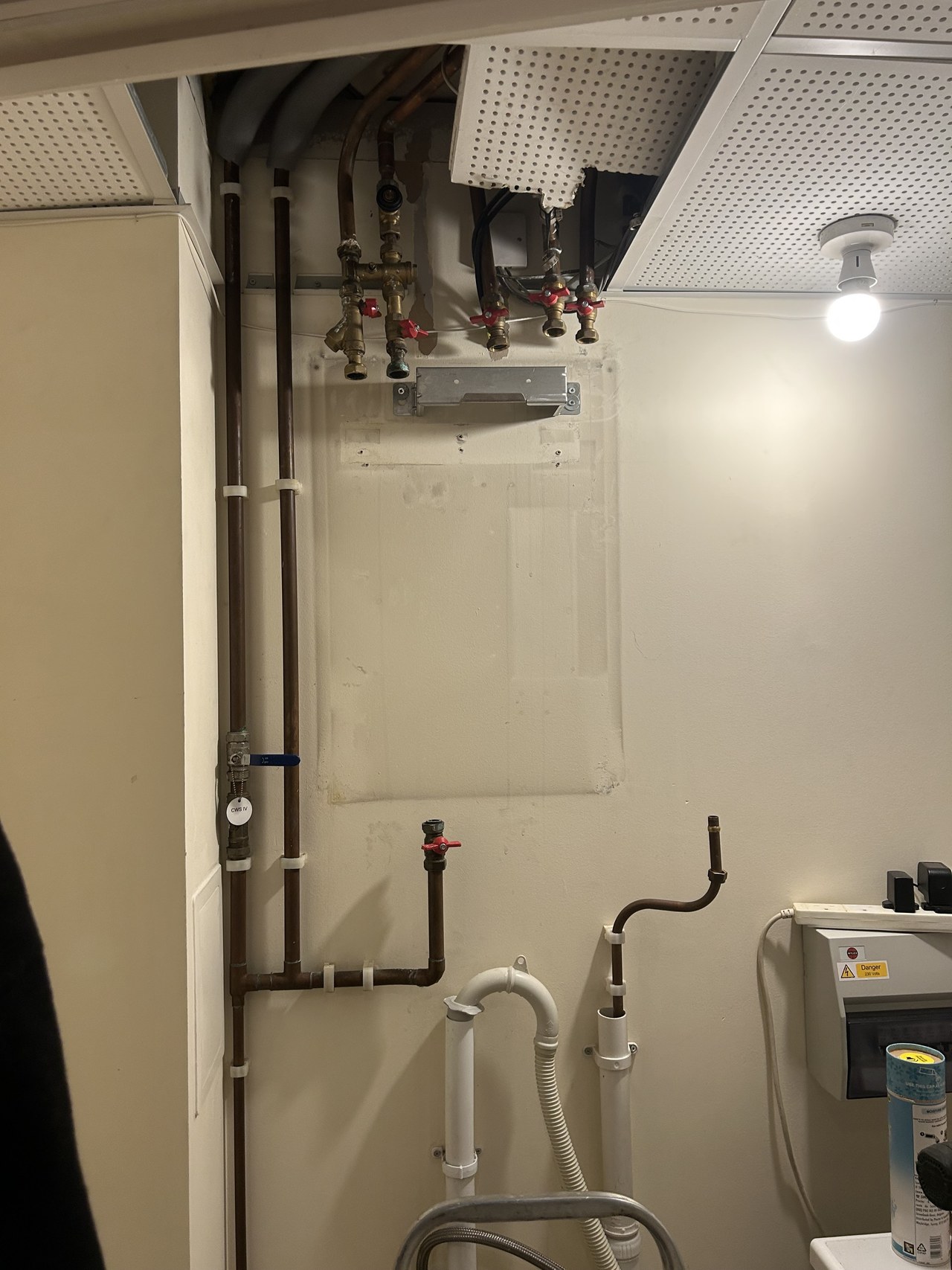
Why there is no single answer
Service intervals for heat interface units are not set by law the way an annual inspection of a gas appliance is for a landlord. They are set by the manufacturer's recommendation, by the terms of your lease, and by what the managing agent has decided for the building. Those three frequently disagree.
Annual is the interval most buildings land on, and it is what most manufacturers suggest in their documentation. But a unit in a building with clean, well-treated system water and good filtration will go longer comfortably, and a unit in a building whose system is full of debris will need looking at sooner.
That is why this guide will not give you a confident number for your flat. Your managing agent knows what the building requires, and that is the answer that matters.
What a service actually involves
It is worth knowing, because 'servicing' means very different things from different people and some of what gets charged for is a visual check and a sticker.
The strainers come out and are cleaned. These are mesh filters catching debris off the building's system, and they are the single commonest reason hot water performance drops. On a unit nobody has touched in years they can be close to solid.
The plate heat exchangers are checked for scale and fouling. In hard water areas, which includes most of Essex and north Kent, scale on the plates reduces the heat transferred and there is no way to tell from outside.
The actuator is driven through its range, to confirm the valve that controls the building's hot water is actually moving as the controls ask. The controls themselves are tested on both circuits, heating and hot water, because a unit can work perfectly on one and not the other.
The valves are checked for passing, and the flow temperature is read against what the building is actually sending, because a unit can only work with what it is given. If the building's flow temperature has drifted, no amount of work on the unit will fix the symptom.
The symptom that tells you it is overdue
Lukewarm hot water that has got worse so gradually you cannot say when it started.
This is the characteristic failure of a neglected heat interface unit and it is almost never reported as a fault, because there is no day on which it broke. People turn the tap further round, run the bath a bit longer, and adjust. We have been to flats where the residents assumed that was simply how the building was.
The other one is a shower that runs hot for a minute and then cools. That points at restricted flow or a fouled exchanger rather than the supply.
Doing a block together
If you manage or own several flats, servicing them in one visit is both cheaper per property and far less disruptive than booking each separately. Our pricing reflects that: £130 for a single property, £120 each for up to five, and £100 each for five to ten in the same visit.
A run of flats off one riser goes in sequence over a day. The things that decide whether that goes smoothly are access to the plant room, residents having been told, and somebody knowing where the isolation valves are. None of it is complicated and all of it is better sorted before the morning.
What happens if it is never serviced
Not a dramatic failure, which is precisely why it is neglected. The deterioration is slow and nobody can point to a day it started.
The strainers fill first. Flow drops, and the hot water gets a little weaker each year. Because it is gradual, the household adapts: the tap goes further round, the shower runs a bit longer before anyone gets in.
Then the exchanger fouls and scales, in hard water areas particularly, which compounds the same symptom. By this stage the performance gap against a serviced unit in the same block is obvious if you compare them and invisible if you do not.
Meanwhile the actuator, which is a mechanical valve that moves every time the system asks for heat or hot water, is doing that without anyone ever confirming it still travels through its full range. When it eventually sticks, it sticks suddenly, and that is the call that comes in February.
The honest summary is that servicing a heat interface unit is not about safety, because nothing burns. It is about not paying for a replacement you did not need, and not losing the hot water performance you are already paying the network for.
On the facts in this guide. How a heat interface unit works is described here from the plate heat exchanger principle common to every make. Anything that would differ between manufacturers, including error codes, set pressures and service intervals, is deliberately not stated as a number: check your own unit's manual or ask whoever manages the building.
Questions people ask
Is HIU servicing a legal requirement?
Not in the way an annual gas appliance inspection is. It is usually a lease or building requirement rather than a statutory one, and your managing agent will know what applies to your development.
What does a service cost?
£130 for a single property. £120 each for up to five properties and £100 each for five to ten, when they are done in the same visit.
My unit seems fine. Is it worth servicing?
On hard water, usually yes. Scale and debris build up slowly enough that nobody notices the hot water getting weaker, so a first service on a neglected unit often makes an immediately noticeable difference.
Does the building service it or do I?
It depends entirely on the development. Some agents arrange it for every flat, some leave it to residents. Worth checking before you book it yourself.
How long does it take?
A single unit is usually a straightforward visit. A run of flats on the same riser goes considerably faster per flat than the same number scattered across a borough.
Can one visit cover several flats in the block?
Yes, and it is how most blocks do it. £120 a property for up to five and £100 a property for five to ten in the same visit. A run of flats off one riser goes in sequence over a day.
What do I get at the end of a service?
What was found, in plain words, with anything worth watching flagged before it becomes a breakdown. For a block, one report covering every flat rather than a sheet per door.
Is servicing worth it if the hot water is fine?
On hard water, usually. The point of servicing a unit that seems fine is that the decline is gradual: by the time the hot water is obviously poor, the exchanger has been working at reduced output for a long time and you have been paying the network for heat you were not getting.
Call us for your instant no-obligation quote
Tell us what needs doing and we will tell you what it takes. No obligation, and nothing starts until you have agreed the price.
Get in touch
Tell us what is happening and where the property is. A photo of the unit, the fault code or the leak answers more than a paragraph does.
The plumber was really good. He fixed the HIU that was leaking. Now it doesn’t leak anymore, and everything works perfectly. He did a great job!
Good HIU service, knows his staff well and very quick and the gentleman even helped fixed error code on ambiente heating system, which was not part…