
Smart thermostats with a heat interface unit
Smart thermostats and heat interface units: what works, what to check before buying one, and why where the thermostat sits matters more than which one you buy.
Usually yes. A heat interface unit's heating circuit is controlled much like any other, so a smart thermostat that can replace your existing room thermostat will generally work. The things to check are what wiring your existing control uses, whether your building or lease restricts changes, and where the thermostat is actually sited, because that matters more than which model you buy.
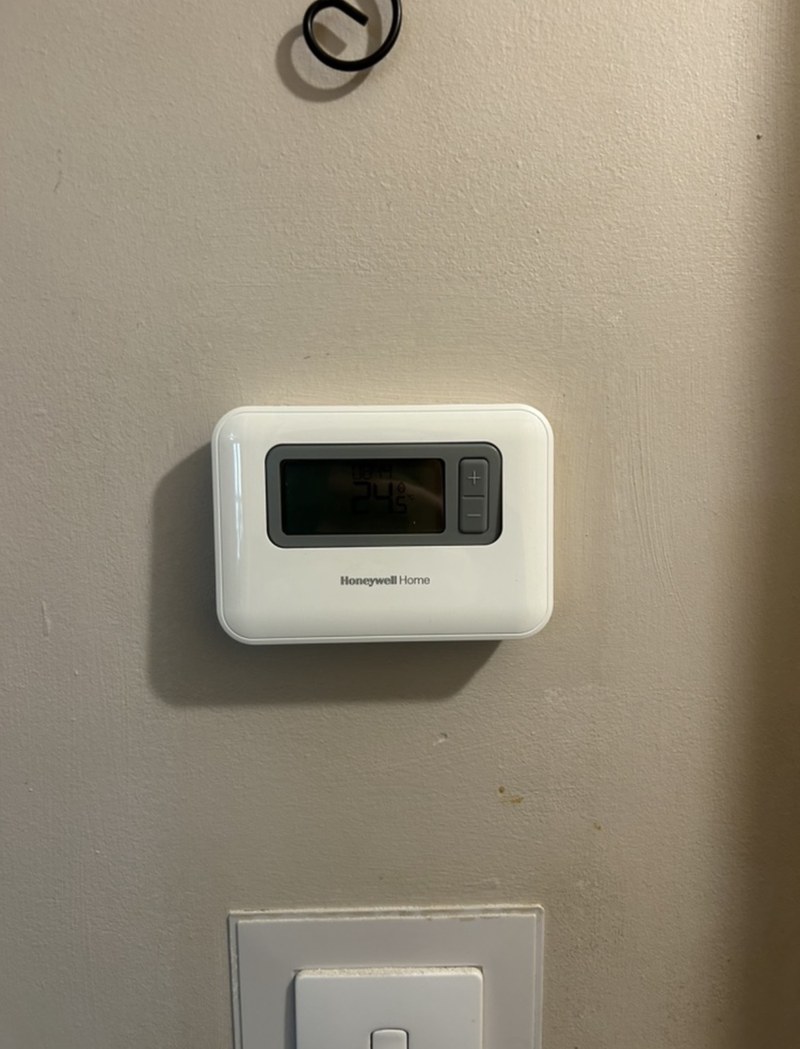
Why it usually works
From the thermostat's point of view, a heat interface unit is just something that provides heat when asked. The thermostat's job is to close a contact when the room is cold and open it when the room is warm, and the unit's controls respond to that.
That is why most smart thermostats that can replace a conventional room thermostat will work with an HIU. The complication is not usually the unit; it is the wiring and the building.
What to check before buying one
What is on the wall now, and how is it wired. Some systems use a simple switched pair, some use additional wiring for power, and the thermostat you want may expect one and not the other. Photograph the existing control and the back of it if you can see the terminals without removing anything live.
Whether anything in your lease or your heat supply agreement restricts changes to the heating controls. A few developments do, particularly where the unit was installed and is maintained by the network operator.
Whether your unit's own controls are integrated with the existing thermostat in a way that makes swapping it less simple. Some units have their own controller on the front and the room thermostat talks to it; some do not.
The thing that matters more than the model
Where the thermostat is.
A thermostat sited in a hallway next to a front door that opens onto a cold communal corridor will keep calling for heat long after every room in the flat is warm, because the hallway never gets warm. The result is a flat that overheats and a bill that reflects it, and no amount of scheduling from an app will fix it.
In a flat, the other common version is a thermostat on an internal wall next to a hot pipe run, which does the opposite: it thinks the flat is warm when it is not, and the heating cuts out early.
This is why moving a thermostat is often a better investment than upgrading it, and why we look at where it is before talking about what it is.
Getting the useful part out of it
The part of smart heating that actually changes a bill is the scheduling and, where it is available, room by room control. The app is how you reach those things, not the benefit in itself.
Which means setting it up properly on the day matters. A smart thermostat left on its factory schedule is a more expensive version of the thermostat it replaced. We set the schedule up with you before leaving rather than handing over a box and a login.
Scheduling a flat on communal heating
Flats behave differently from houses, and the schedule that suits a house is frequently wrong for a flat, which is the practical part of getting this right.
A flat has fewer external walls and is surrounded on several sides by other heated homes, so it loses heat more slowly and recovers faster. The deep setback that makes sense in a draughty house, letting the temperature fall a long way overnight, often achieves less in a flat because the flat was never going to get that cold.
That means shorter, better targeted heating periods usually beat a long low background, and the saving comes from not heating an empty flat in the afternoon rather than from dropping the night temperature by four degrees.
Room by room control, where you have it, is worth more in a flat than scheduling is. A bedroom that nobody is in until ten at night, and a living room nobody uses before six, are the two rooms where the money actually is.
One warning worth giving: do not schedule the hot water off on a heat interface unit as though it were a cylinder. In most installations the hot water is made on demand and there is nothing to store, so there is nothing to schedule and switching it off simply means no hot water when you open the tap.
We set the schedule up with you on the day, on your actual week, rather than leaving the factory default and an app to work out.
On the facts in this guide. How a heat interface unit works is described here from the plate heat exchanger principle common to every make. Anything that would differ between manufacturers, including error codes, set pressures and service intervals, is deliberately not stated as a number: check your own unit's manual or ask whoever manages the building.
Questions people ask
Will a smart thermostat save me money on communal heating?
It can, through better scheduling and not heating an empty flat. How much depends on the network's heat tariff, which is set by the heat supply agreement rather than by you.
Do I need permission?
Possibly. A few developments restrict changes to heating controls, especially where the unit is maintained by the network operator. Worth one question to the managing agent.
Which brand do you fit?
Whatever suits the system and what you want it to do. The right question is usually about wiring and siting rather than brand.
Can you move the thermostat as well?
Yes, and in a flat with a cold hallway that is frequently the change worth making. It is charged at the hourly rate like any other work.
How much does it cost?
£150 an hour with a one hour minimum. A straight swap is usually within that; a multi-room system takes longer and we say so before starting.
Will it work with my unit's own controller?
Usually, though some units have an integrated controller the room thermostat talks to, which makes the swap less simple. A photograph of what is on the wall and what is on the front of the unit answers it before anyone comes out.
Can I fit it myself?
If it is a like for like swap on simple wiring, many people do. The reasons to have it done are if the wiring differs from what the new one expects, if the thermostat needs moving, or if your building restricts changes to the controls.
Should I set the hot water on a schedule?
No, not on a typical heat interface unit. The hot water is usually made on demand rather than stored, so there is nothing to heat in advance and scheduling it off simply means cold taps.
Call us for your instant no-obligation quote
Tell us what needs doing and we will tell you what it takes. No obligation, and nothing starts until you have agreed the price.
Get in touch
Tell us what is happening and where the property is. A photo of the unit, the fault code or the leak answers more than a paragraph does.
The plumber was really good. He fixed the HIU that was leaking. Now it doesn’t leak anymore, and everything works perfectly. He did a great job!
Good HIU service, knows his staff well and very quick and the gentleman even helped fixed error code on ambiente heating system, which was not part…