
HIU pressure: what the gauge is telling you
Heat interface unit pressure dropping or low? What the gauge measures, what a falling reading means, and what you can safely check yourself.
The pressure gauge on a heat interface unit reads your flat's own heating circuit, not the building's supply. If it falls slowly over weeks, the usual cause is a small leak somewhere on your heating circuit or air being released. If it falls fast, there is a leak worth finding quickly. Photograph the gauge and note the reading rather than repeatedly topping it up.
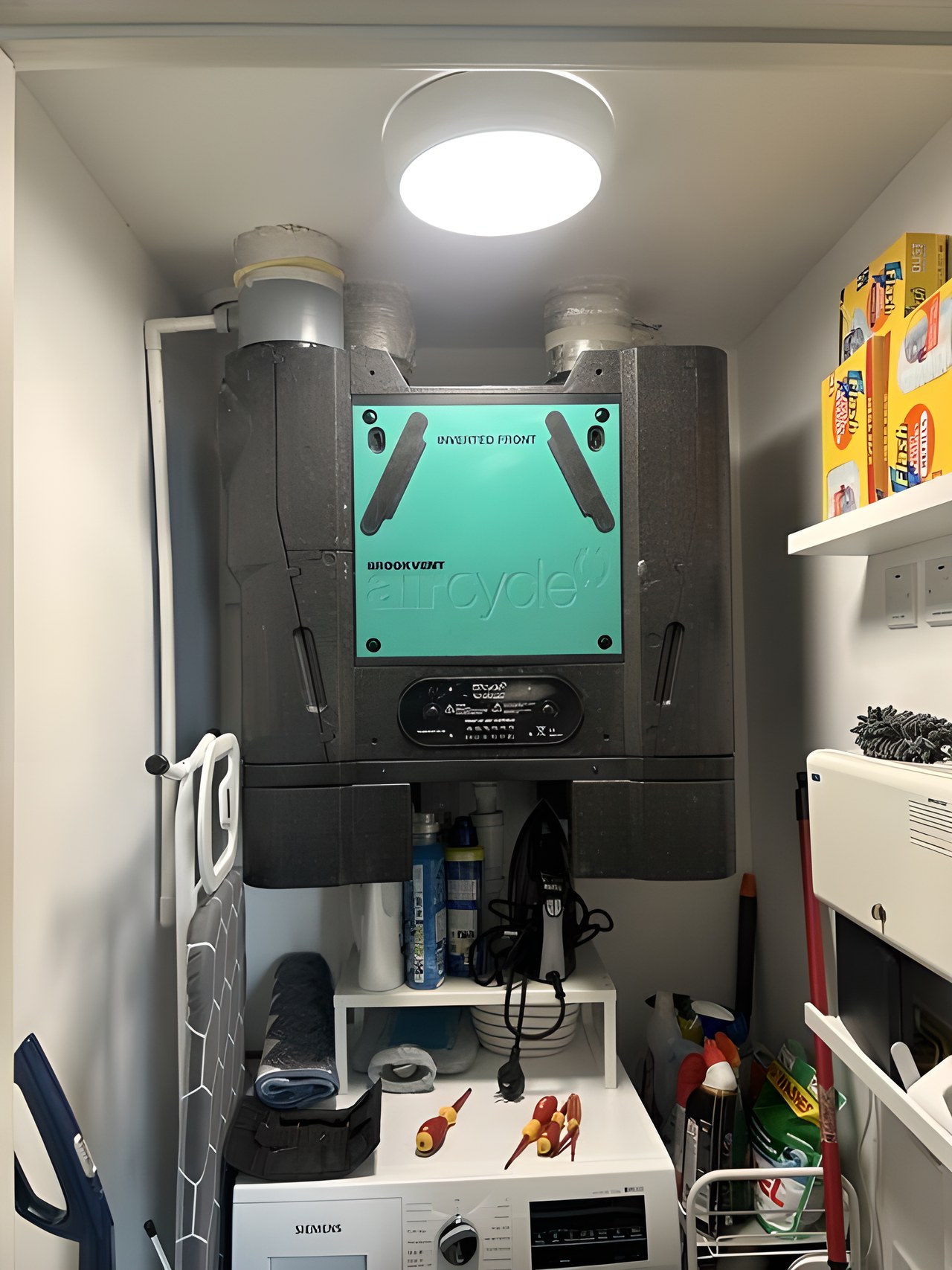
What the gauge is actually measuring
This is the part that confuses people, and getting it right saves a wasted call-out. Your flat has its own sealed heating circuit: the water in your radiators belongs to you and stays in your flat. The building's hot water is a separate circuit on the other side of a heat exchanger.
The gauge reads your circuit. So a pressure problem on that gauge is a problem with your radiators and the pipework serving them, not with the building's supply, and not usually with the heat exchanger.
It follows that if your pressure is dropping but your hot water is perfect, that is consistent: the hot water does not depend on your circuit's pressure at all.
A slow fall over weeks
The commonest cause is a very small leak on the heating circuit. Small enough to evaporate before it marks anything, which is why people look for a puddle and do not find one. Radiator valve glands, towel rail connections and joints hidden under floors are the usual places.
Bleeding radiators also drops the pressure, because letting air out of a sealed system reduces what is in it. If you have bled several radiators recently, a fall is expected rather than a fault.
The third possibility is the expansion vessel, which absorbs the change in volume as water heats and cools. When it fails the pressure swings up when the heating runs and down when it cools, which reads as instability rather than a simple fall.
A fast fall
If you top it up and it has dropped again within a day or two, there is a leak of a size worth finding, and repeatedly refilling is both masking it and adding fresh oxygenated water to the system, which accelerates corrosion.
That is the point to stop topping up and have somebody look at it.
What you can safely do
Photograph the gauge. Note the reading and the date, and note it again after a few days. That record tells an engineer more than any description, because the rate of fall is the diagnosis.
Look at the obvious places for damp: under radiator valves, around the towel rail, and the floor under the cupboard.
On topping up: many units have a filling loop and the correct pressure differs between systems, so this guide deliberately does not give you a number to fill to. The right figure for your flat is on the unit, in its manual, or from whoever manages the building. Filling to the wrong pressure can push the system past its relief valve, and then you have a discharge as well as a leak.
Everything else, including anything that involves opening the unit, is an engineer's job.
What an engineer does about a falling gauge
Worth setting out, because 'top it up and see' is what a lot of people are told and it is not a diagnosis.
The first step is establishing the rate. A system that loses a little over a month is a different problem from one that empties in two days, and the rate points at the size and therefore the likely location of the leak.
Then the visible candidates, which are the ones that account for most of them: radiator valve glands, the connections on a towel rail, and any joint that is reachable. Small weeps at valve spindles are extremely common and leave almost no trace because the water evaporates off a warm valve.
Then the expansion vessel, if the pressure swings rather than simply falls. A vessel that has lost its charge makes the gauge climb high when the heating runs and sit low when it cools, and that pattern is distinctive once you look for it.
Then the relief valve. If that is passing, water is leaving the system through the discharge rather than through a leak in the flat, which is why a system can lose pressure with no damp anywhere inside.
And if none of those, the pipework under the floor, which is the expensive one and the reason for checking everything else first.
On the facts in this guide. How a heat interface unit works is described here from the plate heat exchanger principle common to every make. Anything that would differ between manufacturers, including error codes, set pressures and service intervals, is deliberately not stated as a number: check your own unit's manual or ask whoever manages the building.
Questions people ask
What pressure should my system be at?
It varies between systems and we will not guess a number for yours. The correct figure is usually marked on the unit or in its manual, or your managing agent will know. Filling to the wrong one causes its own problems.
My pressure drops but I cannot find a leak.
That is normal for a small one. Water that evaporates before it marks anything still leaves the system. The rate of fall over a week is the useful measurement.
Is low pressure why I have no hot water?
Usually not. The gauge reads your heating circuit, and your hot water comes off the building's supply through the exchanger. If the hot water is poor and the heating is fine, look at the strainers instead.
Can I keep topping it up?
You can, and you should not keep doing it indefinitely. Each refill adds fresh oxygenated water, which accelerates corrosion inside the radiators.
Is it dangerous?
A falling gauge is not usually dangerous in itself. Water escaping somewhere you cannot see, in a flat with somebody underneath, is the part worth acting on.
Does low pressure damage anything?
Not immediately. What does cause damage is the repeated refilling that low pressure prompts, because every refill introduces fresh oxygenated water and oxygen is what corrodes the inside of radiators and produces the black sludge that blocks them.
The pressure goes up when the heating is on and down when it is off.
That is a swing rather than a leak, and it usually points at the expansion vessel having lost its charge. It is a different repair from a leak and worth distinguishing before anyone starts looking for water.
Can I fit a filling loop myself?
There is normally one already, and the issue is not fitting it but knowing the correct pressure for your system, which differs between installations. Filling past the right figure pushes the system to its relief valve and you end up with a discharge as well as whatever you started with.
Call us for your instant no-obligation quote
Tell us what needs doing and we will tell you what it takes. No obligation, and nothing starts until you have agreed the price.
Get in touch
Tell us what is happening and where the property is. A photo of the unit, the fault code or the leak answers more than a paragraph does.
The plumber was really good. He fixed the HIU that was leaking. Now it doesn’t leak anymore, and everything works perfectly. He did a great job!
Good HIU service, knows his staff well and very quick and the gentleman even helped fixed error code on ambiente heating system, which was not part…