
HIU no hot water: the common causes
No hot water from your heat interface unit? The usual causes are a blocked strainer, the actuator or the building supply.
If your heat interface unit has stopped giving hot water, the first question is whether your heating still works. If the heating works and the hot water does not, the fault is almost certainly inside your flat: a blocked strainer, the plate heat exchanger, or the valve that opens the hot water side. If neither works, check with a neighbour, because the building's supply feeds both and may be the problem.
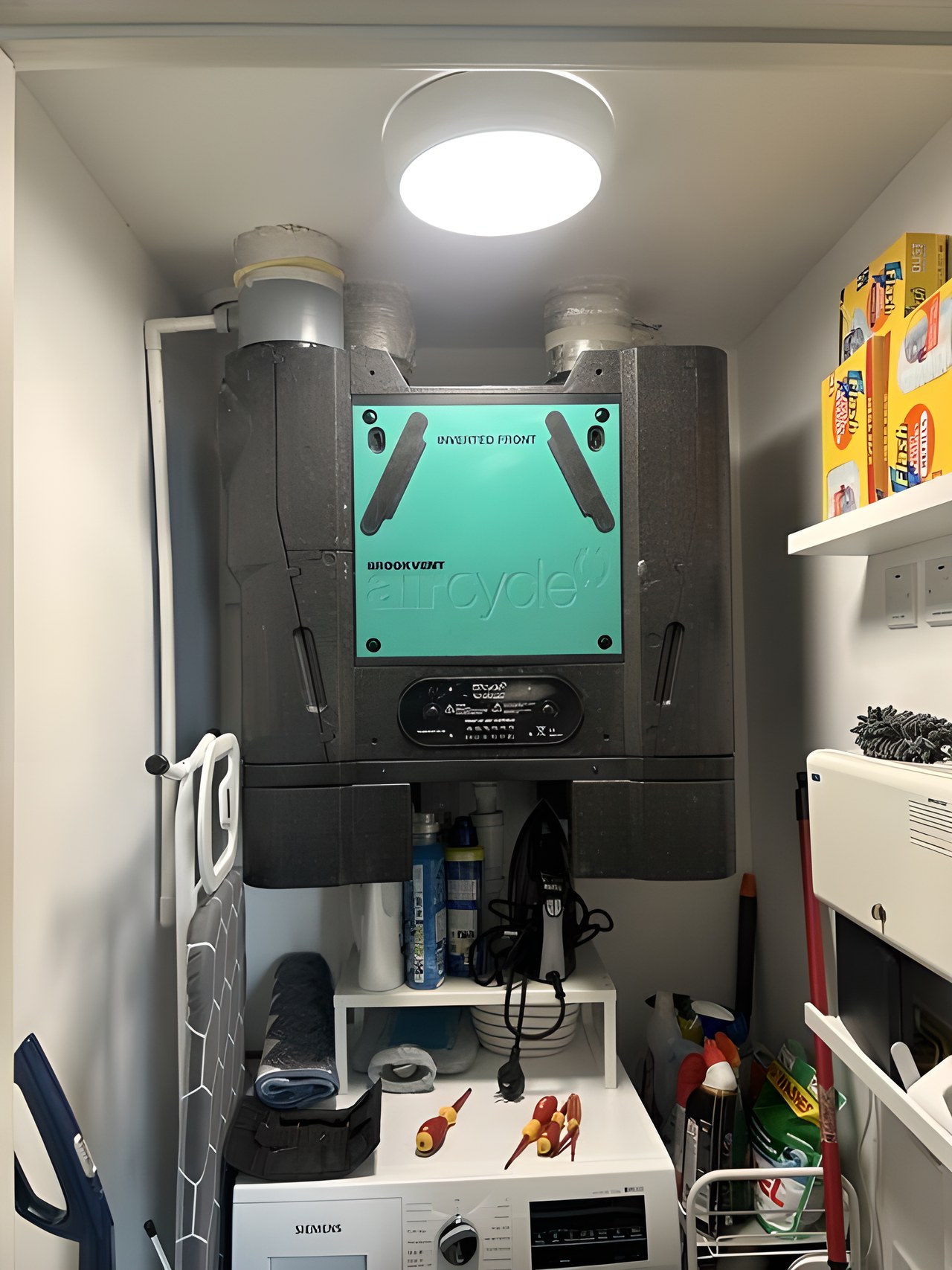
Start here: does the heating still work?
This single question splits the problem in half, and it costs nothing to answer. Turn the heating on and feel a radiator.
If the radiators get hot and the taps do not, the building is sending heat to your flat perfectly well. The fault is on the hot water side of your unit, which is a repair inside your flat.
If neither the radiators nor the taps get hot, the useful next step is to ask a neighbour on the same riser. If they have the same problem, it is the building's supply and the managing agent needs to know, not a plumber. If they are fine, it is still your flat.
The commonest cause: a blocked strainer
A strainer is a small mesh filter on the incoming pipework. It catches debris circulating in the building's system, which is exactly what it is meant to do, and over years it fills up.
When it blocks, the flow through the plate heat exchanger falls. The exchanger can only transfer the heat it is given, so the water from your taps gets cooler. The classic version of this is not no hot water at all but hot water that has become lukewarm so gradually that nobody can say when it started.
Cleaning the strainers is part of a standard service. We have seen plenty of flats quoted for a whole new unit where the strainer had never once been cleaned.
Hot water that runs hot then goes cold
This pattern, hot at first and then cold a minute or two in, points at the heat exchanger rather than the supply. The residual heat in the unit gives you the first burst, and once that is used up there is nothing replacing it fast enough.
The causes are the same family: restricted flow from a blocked strainer, or a fouled or scaled exchanger. In hard water areas, and most of Essex and north Kent are hard water, scale on the exchanger plates is a real factor.
What you can safely check yourself
Four things, none of which need tools and none of which involve opening anything.
Read the pressure gauge if your unit has one, and photograph it. Photograph any display or fault code on the front. Check whether the heating still works. Ask a neighbour on the same riser whether theirs is working.
That is the complete list. Do not open the casing, do not attempt to clean a strainer, and do not touch anything that holds pressure. The water inside is hot enough to scald and the building's side can be at a considerably higher pressure than your own system.
If you can see water leaking, close the isolation valves on the pipes either side of the unit if you can reach them easily, and ring somebody.
What an engineer will do
Check the supply into the flat before checking the unit, because a problem on the riser behaves exactly like a dying unit from inside the flat. Then the strainers, the exchanger, the actuator and the controls, in that order, because that is roughly the order of likelihood.
Our call-out for a heat interface unit is £140, and that is to diagnose it properly rather than to guess. The repair is priced after that, once there is something to price. A part fitted on a hunch is a part you have paid for twice.
What this costs to put right
Worth being plain about, because the gap between the cheapest and the dearest outcome here is large and people reasonably want to know before they ring.
The diagnostic visit is £140. That covers coming out and finding what is actually wrong, including testing the supply into the flat as well as the unit, which matters because a problem on the riser presents exactly like a failing unit from inside the flat.
If the answer is strainers and a clean, that is service territory and a single property service is £130. If it is a part, the repair is priced once it is diagnosed, so you are told the cost before anything is changed rather than after.
If the unit genuinely is finished, replacement is £750 labour with the unit and materials priced separately, because what goes in depends on what the building will accept.
The reason for diagnosing before quoting is not caution for its own sake. A blocked strainer and a failed exchanger produce the same complaint from the tap, and the difference between them is roughly the difference between a service and a four figure job. Anyone quoting the large one without having checked the small one first is guessing with your money.
On the facts in this guide. How a heat interface unit works is described here from the plate heat exchanger principle common to every make. Anything that would differ between manufacturers, including error codes, set pressures and service intervals, is deliberately not stated as a number: check your own unit's manual or ask whoever manages the building.
Questions people ask
My neighbours have hot water and I do not. What does that mean?
That the building's supply is working and the fault is inside your flat: the strainer, the exchanger, the actuator or the controls. It is the single most useful thing you can establish before anyone comes out.
I have heating but no hot water.
The building is clearly sending heat, so the fault is on the hot water side of the unit. Usually a strainer, the plate heat exchanger or the valve that opens that circuit.
Could it be the pressure?
It can be, and the gauge is worth photographing. But low pressure on your own heating circuit affects the radiators rather than the taps, so if the heating is fine, pressure is unlikely to be the hot water explanation.
Is it worth servicing rather than repairing?
Frequently, yes. If the symptom is lukewarm rather than cold water, a service that cleans the strainers and checks the exchanger often is the repair.
Do you work on gas boilers too?
No. We are not Gas Safe registered and we do not work on gas appliances. In a flat on communal heating there is no gas appliance, which is why we can work on them.
Call us for your instant no-obligation quote
Tell us what needs doing and we will tell you what it takes. No obligation, and nothing starts until you have agreed the price.
Get in touch
Tell us what is happening and where the property is. A photo of the unit, the fault code or the leak answers more than a paragraph does.
The plumber was really good. He fixed the HIU that was leaking. Now it doesn’t leak anymore, and everything works perfectly. He did a great job!
Good HIU service, knows his staff well and very quick and the gentleman even helped fixed error code on ambiente heating system, which was not part…